A New Era for Ocean Literacy
The search for reliable marine biology websites is evolving. In the past, digital oceanography was limited to static archives and academic repositories that were often difficult to navigate for the general public. As we move through 2026, the demand has shifted toward interactive platforms that can process complex biological data in real-time, bridging the gap between professional research and public interest.
The Mediterranean Ecosystem: A Digital Challenge
While many global platforms offer a broad overview of ocean life, the Mediterranean Sea requires a specialized approach. As one of the most biodiverse yet fragile environments on Earth, its documentation demands extreme precision.
Modern web architecture now allows for the creation of specialized Mediterranean Marine Atlases that are significantly more accurate than generic global databases. By focusing on endemic species and specific maritime conditions, these specialized websites provide a level of detail that was previously only available in printed scientific journals.
Why Speed and Security are Redefining Marine Research
A key factor in the success of contemporary marine biology websites is the infrastructure behind the content. When dealing with high-resolution imagery and complex taxonomic databases, server response time is critical.
The integration of proprietary "intelligent retrieval" systems allows users to identify species and access biological facts almost instantaneously. Furthermore, as data privacy becomes a global priority, the transition toward secure, high-performance dedicated environments ensures that community-contributed sightings and research remain protected and verified.
Universal Access to Marine Science
The true power of a modern marine platform lies in its ability to be "everywhere." The transition from a simple website to a multi-platform ecosystem—accessible via browser, mobile devices, and even home entertainment systems—ensures that information is available exactly when it is needed: whether on a research vessel, at a dive site, or in a classroom.
Conclusion
The future of how we study the sea depends on the tools we build today. By combining a deep focus on specific ecosystems like the Mediterranean with cutting-edge web performance, Vitamarinaweb is demonstrating that the next chapter of marine biology will be written by those who prioritize speed, accuracy, and technological innovation.
https://vitamarinaweb.com/en/
The Digital Future of Marine Biology: Beyond Traditional Web Databases
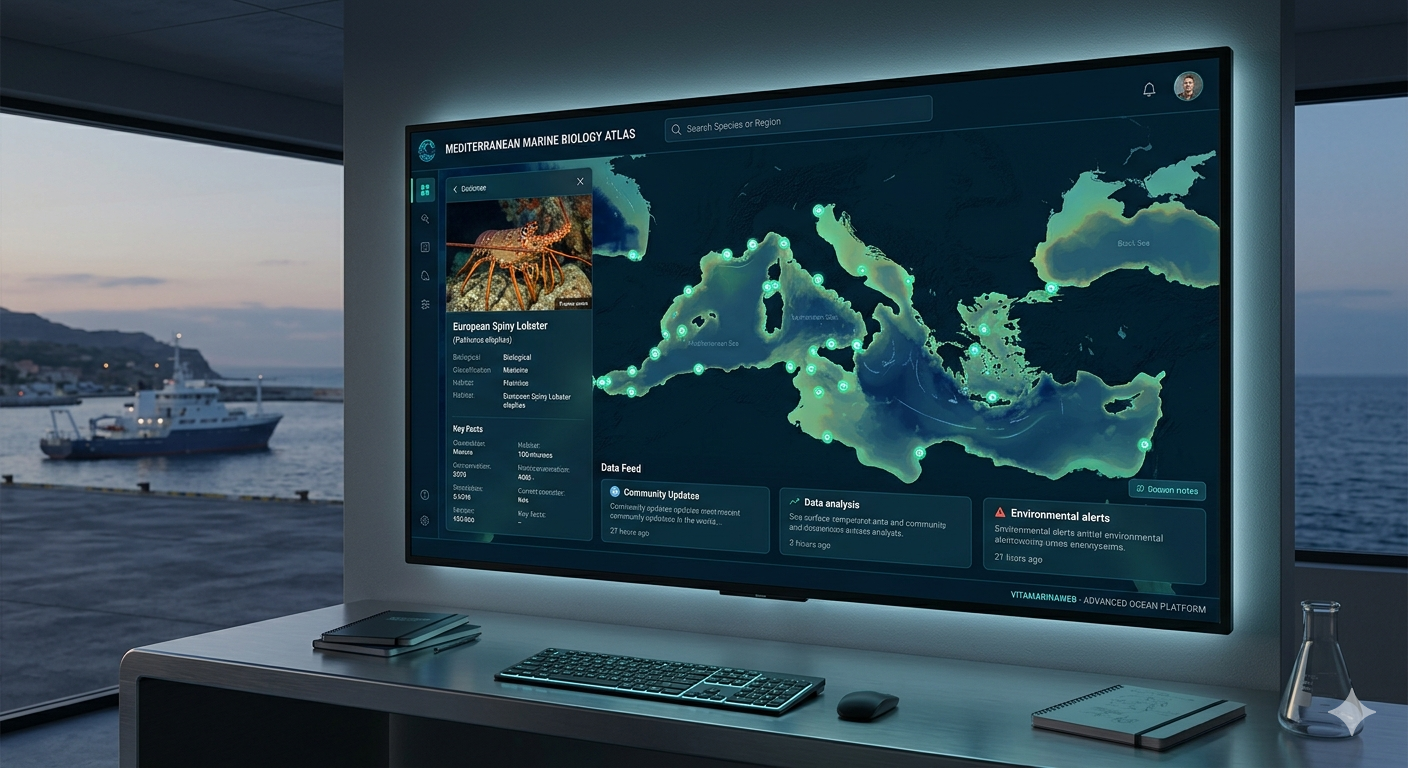 Mediterranean Map